
Privacy Fence Height Regulations: Local Rules Explained
February 24, 2026
- By
- Florida Gate Masters
- Fence & Gate Specialists
Most privacy fence height regulations limit backyard fences to 6 feet and front yard fences to 3 – 4 feet, but the exact rule depends on your local zoning code and lot layout. At Florida Gate Masters, we’ve been helping property owners navigate fence permits and installations for years of experience, and we’ve seen how a few inches over the limit can trigger real problems. Before starting, many homeowners review guidance from a professional fence & gate company to avoid costly surprises. We’ve seen homeowners invest thousands in a brand-new 8-foot privacy fence – only to receive a violation notice requiring them to cut it down or remove it entirely. That kind of mistake can double your project cost and create tension with neighbors. Understanding the rules upfront protects your budget, your property value, and your peace of mind.
A Practical Checklist Before You Build

Start with three non-negotiables: confirm your zoning classification, verify setback and visibility requirements, and secure a permit if required. Height limits are rarely universal across an entire community. Corner lots, waterfront properties, and homes in planned developments often follow stricter standards. Most municipalities adopt zoning ordinances that work alongside state building codes. The building code typically governs structural integrity – post depth, wind loads, and footing requirements – while zoning regulates height and placement.
- 2021 International Residential Code (IRC) Section R105.2 – Addresses permit exemptions. Many areas exempt fences under a certain height (often 7 feet) from building permits, but zoning approval may still be required. Consequences: building without required approval can result in stop-work orders or fines.
- Zoning Ordinance – Fence Height and Visibility Triangle Sections – Typically found on your local government’s official website (verify with your planning department). These sections define maximum heights by yard type and require clear sightlines at intersections. Consequences: mandatory removal, denied variances, or insurance issues after accidents.
- Measure from finished grade, not from the low side of a sloped yard.
- Account for decorative lattice; many codes include it in total height.
- Confirm HOA covenants separately – these are private restrictions that can be stricter than municipal codes.
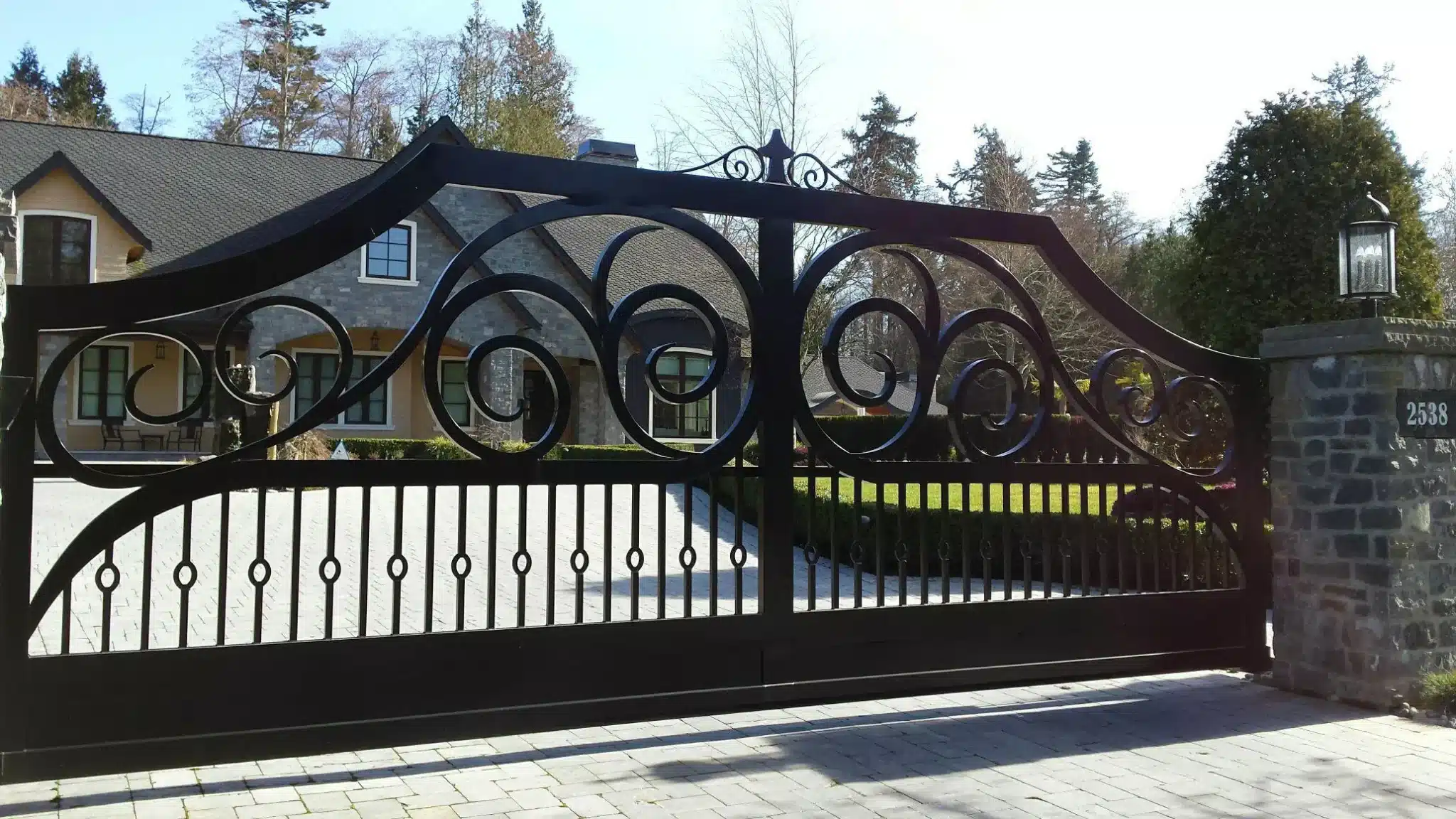
How to Avoid Paying Twice for the Same Fence
The most expensive mistake we see is building first and asking questions later. Height violations often require partial demolition, not minor adjustments. A homeowner once installed custom 8-foot horizontal cedar panels with steel PostMaster posts embedded 36 inches deep in concrete. The local code allowed only 6 feet in the rear yard without a variance. Cutting the panels down wasn’t enough – the posts were too tall and visible above the top rail. The correction required removing and replacing every post. The rework cost nearly as much as the original installation. Common mistakes to avoid:
- Measuring from the wrong grade point on sloped lots.
- Ignoring corner lot sightline restrictions.
- Assuming pre-made 8-foot panels are automatically compliant.
- Skipping HOA review.
- Site complexity and grading
- Material costs and supply fluctuations
- Total linear footage and gate count
Get Clarity Before You Build
Fence height regulations are not something you want to guess about. One small mistake can lead to costly modifications, project delays, HOA disputes, or even removal of a newly installed fence. At Florida Gate Masters, we take the uncertainty out of the process. Our team carefully reviews your property survey, zoning classification, elevation changes, corner visibility requirements, and HOA guidelines before a single post goes into the ground. This proactive approach protects your investment and saves you time, money, and frustration. If you are considering a standard 6-foot privacy fence or exploring approval for additional height, now is the time to get clear answers. Do not risk fines or setbacks by moving forward without expert guidance. Contact Florida Gate Masters today for a professional evaluation and straightforward recommendations. We will help you move forward with confidence, clarity, and complete peace of mind.

FAQs
How tall can a privacy fence legally be in a backyard?
In most residential zones, backyard privacy fences are limited to 6 feet in height. Some municipalities allow up to 7 or 8 feet, but that often requires a special permit or variance. The height is typically measured from finished grade on the side facing your property. On sloped lots, this detail matters because measuring from the lower neighboring side could put you over the limit. Corner lots and properties near intersections may face additional visibility restrictions that reduce allowable height near the street. Homeowners should also check HOA covenants, which can impose stricter limits than city or county rules. Before building, confirm your zoning district and review the fence section of your local ordinance. Even if a building permit is not required, zoning compliance still applies. A quick verification step can prevent removal orders and costly rework later.
Do I need a permit to build a privacy fence?
Whether you need a permit to build a fence depends on your local municipality, zoning district, and the proposed fence height. Under the 2021 International Residential Code Section R105.2, many residential fences under 7 feet in height are exempt from a building permit. However, this exemption does not automatically eliminate other requirements. Zoning approval is frequently required to confirm compliance with setback rules, easements, and height limitations. Some cities and counties require permits for all fences regardless of height, especially in planned communities or historic districts. Obtaining a permit helps ensure the fence meets structural and safety standards. Requirements may address post depth, frost line considerations, wind resistance, and proper footing installation. In high-wind regions, fence posts often need to be set 30-36 inches deep with concrete footings sized according to soil type and load conditions. Skipping a required permit can result in stop work orders, fines, mandated removal, or complications during a future home sale. Permit processing times vary, typically ranging from a few days to several weeks depending on department workload and whether a property survey or site plan review is required. Always confirm specific requirements with your local building department before beginning construction.
How much does it cost to correct a fence height violation?
Correction costs depend on how the fence was originally installed, how much it exceeds the permitted height, and the overall condition of the existing structure. In cases where the height overage is minimal, a contractor may be able to modify the fence by trimming panels or cutting down posts. These minor adjustments often range from a few hundred to around one thousand dollars, depending on labor time and materials. However, if the fence posts were set too high in concrete, full removal and reinstallation may be necessary. That process can range from 1500 to 5000 dollars or more, particularly for longer fence runs. If a variance application is needed, property owners should also account for municipal filing fees, which typically fall between 300 and 1000 dollars. Approval timelines may extend several weeks and could involve additional documentation or site inspections. Expenses can increase further if new concrete footings, replacement panels, debris hauling, or grading corrections are required. These figures serve as general benchmarks for planning purposes only and are not a fixed estimate. A detailed on site evaluation is necessary to determine the exact scope of work and provide an accurate proposal.
Can I build a taller fence if my neighbor agrees?
Neighbor approval does not override municipal zoning laws or local building codes. Even when adjoining property owners fully agree on a taller or differently placed fence, city or county regulations still determine what is legally permitted. Height limits, setback requirements, and visibility restrictions are established by ordinance and remain enforceable regardless of private agreements. A written understanding between neighbors can certainly reduce the risk of personal disputes and clarify maintenance responsibilities, but it does not shield either party from citations, fines, or mandatory removal if the structure violates code. If you wish to install a fence that exceeds the standard height limit, you will usually need to apply for a variance through the local zoning or planning board. This process commonly involves submitting detailed plans, paying an application fee, providing public notice, and attending a hearing. Approval is not based on personal preference alone. Instead, you must demonstrate a specific hardship or unique property condition that justifies the exception. Before moving forward, carefully review the applicable ordinance and consider compliant alternatives such as strategic landscaping, layered plantings, lattice extensions, or decorative features that enhance privacy without exceeding legal limits.
What are signs my existing fence may violate height regulations?
Common warning signs of a potential fence violation include a structure that rises above 6 feet in the backyard without supporting documentation, obstructs visibility near a driveway or alley, or extends too close to the street on a corner lot. Local codes often impose stricter height and setback rules for corner properties to preserve clear sightlines for drivers and pedestrians. Another frequent issue occurs when decorative lattice or privacy panels are added after the original installation, unintentionally increasing the total height beyond what is permitted. Start by confirming whether you have a valid permit record or written approval from your local building department or homeowners association. If the fence was installed before you purchased the property, contact the seller for documentation or request records directly from the municipality. Measure the fence carefully from the finished grade using a level and tape measure. On sloped terrain, measure from the highest adjacent grade to ensure accuracy and avoid underestimating the true height. If you identify a possible violation, address it proactively before listing your home. Buyers, lenders, and title companies often require resolution of open code issues, and resolving them early can prevent delays or costly negotiations later in the transaction.
Do HOA rules override city fence height regulations?
Homeowners association rules do not override city or county regulations, but they can be more restrictive. Property owners are responsible for complying with both sets of requirements. Municipal zoning codes establish the maximum allowable fence height, placement, and sometimes visibility standards at corners or near driveways. However, HOA covenants, conditions, and restrictions often impose additional limitations related to appearance, approved materials, color choices, and overall design consistency within the community. For instance, a city ordinance may allow a 6 foot vinyl privacy fence along a rear property line, while the HOA may limit fences to 5 foot wood construction with a specific board style or spacing pattern. Even if your fence fully complies with municipal code, failing to follow HOA guidelines can result in fines, mandatory modifications, or complete removal at your expense. Before beginning installation, submit detailed plans, material samples, and height specifications to the HOA architectural review committee. Obtain written approval and keep it for your records. Coordinating HOA and municipal requirements during the planning phase helps prevent costly mistakes, project delays, and potential disputes with neighbors or the association.
What should I look for when hiring a fence contractor?
Verify that the contractor is properly licensed if your state or municipality requires licensing, and confirm that they carry active general liability insurance and, when applicable, workers compensation coverage. Request proof of insurance and check that the policy is current. Ask whether the contractor manages permit applications, zoning verification, and inspections as part of their service, since these steps are essential for code compliance. Experienced professionals review property surveys carefully, confirm setback requirements, and measure from finished grade to ensure the planned fence height complies with local regulations. Request a detailed written proposal that specifies materials, post depth, footing dimensions, gate hardware, and total linear footage. For wood fences, confirm that posts are pressure-treated and rated for ground contact, and that all fasteners and brackets are corrosion-resistant. For vinyl or metal systems, ask whether the products meet local wind load standards and manufacturer specifications. A reputable contractor will clearly explain height restrictions, property line considerations, and any homeowner association rules. Clear documentation and open communication at the beginning of the project help prevent misunderstandings, costly corrections, and future disputes.
What should I do if I receive a fence height violation notice?
First, review the notice carefully and verify the exact section of the local ordinance that is being cited. Make sure you understand whether the violation relates to overall height, placement, or an added feature such as lattice or decorative panels. Measure the fence height accurately from the correct reference point, typically ground level on the highest adjacent grade, to determine how much it exceeds the permitted limit. Even a few inches can matter. In some situations, minor adjustments such as trimming the top portion or removing decorative toppers may bring the fence into compliance without major reconstruction. Contact the issuing department as soon as possible to acknowledge receipt of the notice and request clarification if anything is unclear. Ignoring the notice can result in escalating fines, additional penalties, or even liens against the property. If the fence substantially exceeds the allowed height, ask whether applying for a variance is possible and what documentation or site plans are required. Do not begin structural changes until you fully understand the correction requirements. A professional evaluation can help determine whether modification or full replacement is more cost effective. Addressing the matter promptly typically minimizes penalties and helps preserve property value.